Signed in as:
filler@godaddy.com

When you’re choosing a European mechanic, asking the right questions is essential. Understanding the unique aspects of European auto repair can help you avoid costly mistakes, especially with luxury vehicles. Knowing what to inquire about guarantees you get the best care for your car and your investment.
Choosing a mechanic for your European vehicle can feel intimidating, especially with the unique complexities these cars often present. Understanding the differences between European and standard auto repair is essential to guarantee you’re making the right choice. Here are some key points to evaluate:
Before choosing a European mechanic, reflect on these questions to guide your decision-making process. This knowledge will help you find a skilled professional who understands your vehicle’s unique needs and can provide the service it deserves.
European vehicles have tighter tolerances and more interconnected systems, so a small shortcut can become a big bill. Ask whether the shop regularly services your exact make/model, what parts they recommend (OEM vs aftermarket) and why, and what warranty covers parts and labor. Also, ask how they confirm the root cause; European cars often need brand-level diagnostics and test plans, not guesswork. These questions help you avoid repeat repairs and protect long-term reliability.
When you’re looking for a mechanic who specializes in European car brands, it’s essential to ask the right questions about their experience. Start by inquiring about their familiarity with specific models like Mercedes-Benz, BMW, and Audi. This can give you insight into their expertise and help guarantee your car gets the care it needs.
When it comes to maintaining your European car, asking the right questions can make all the difference in ensuring long-term reliability. You’ll want to know about the specific services recommended for your model and how they align with factory guidelines. Getting clear answers will help you keep your vehicle running smoothly for years to come.
How can you guarantee your European car remains reliable for years to come? It starts with asking the right European car maintenance questions. Regular maintenance is key to longevity, so make sure you’re proactive. Here are some essential questions to take into account:
Maintaining your European vehicle isn’t just about regular check-ups; it also involves understanding the specific services recommended by the manufacturer. You might want to ask your mechanic questions about services for European models, such as: What factory-recommended maintenance schedules should I follow? Are there any specific fluids or parts unique to my vehicle? How often should I have major services performed? What warranties are offered on parts and labor for European vehicles? Do you have expertise with my specific make and model? By addressing these questions, you can guarantee your car receives the care it needs for peak performance and longevity. Don’t hesitate to clarify any uncertainties regarding your vehicle’s service requirements.
When it comes to diagnosing issues with your European car, asking the right questions can make all the difference. You’ll want to know what tools and software the mechanic uses, as well as their qualifications in handling European vehicles. Understanding their diagnostic process will help guarantee you get accurate problem detection and effective repairs.
What questions should you ask a mechanic to secure accurate diagnostics for your European car? It’s essential to get the right information for effective problem detection. Here are some European car diagnostics questions to reflect on:
How can you guarantee your European vehicle gets the best care? One key aspect is to ask specific European auto repair questions regarding the tools and software your mechanic uses. Are they equipped with the latest diagnostic tools designed for European cars? This guarantees they can accurately identify issues unique to your vehicle. You should also inquire about the software they use for repairs and updates—does it match the manufacturer’s specifications? Additionally, ask if their technicians are certified in European auto repair. Certification indicates a level of expertise and familiarity with your car’s intricacies. By asking these questions, you’ll feel more confident in the quality of care your vehicle receives, guaranteeing it remains in top condition for years to come.
When it comes to getting your European car repaired, understanding costs and building trust with your mechanic is essential. You’ll want to ask specific questions about pricing and services to guarantee you’re getting a fair deal. Additionally, knowing how to choose a reliable mechanic in Northfield can make all the difference in your car’s maintenance.
Choosing the right mechanic for your European car in Northfield can feel overwhelming, especially when it comes to costs. It’s important to ask the right cost questions for European car repair to make sure you’re making an informed decision. Here are some essential questions to take into account:
Being transparent about costs not only builds trust but also helps you budget effectively for your car repairs.
Before you choose a European mechanic in Minnesota, ask for specifics: “How often do you service my make/model each month?” “Do you follow factory service schedules and procedures?” “Do you use OEM/OE parts, and will you list them on the estimate?” “What warranty covers parts and labor, and what’s excluded?” “Will you confirm price changes before doing additional work?” Clear answers here usually separate true European specialists from general shops. Finally, trust your instincts; a trusted European mechanic in Houston, Texas, should make you feel comfortable and confident in their expertise. These questions can guide you toward the right choice for your vehicle’s needs.
If you’re looking for expert care for your European vehicle, Top Gear Autoworks is the place to go. Our ASE-Certified technicians are dedicated to providing exceptional service tailored to your car’s needs. Here are some European vehicle service recommendations you can expect:
At Top Gear Autoworks, we recognize the intricacies of European vehicles and offer reliable, affordable maintenance and repair solutions. Trust us to keep your car running smoothly and efficiently, giving you peace of mind on the road. Call today or schedule an appointment to get a full inspection and a clear estimate before work begins. Visit us today at 1470 Clinton Ln. Northfield, MN!
We offer a variety of warranties on repairs and parts, typically ranging from 12 to 24 months. It’s best to ask about specific coverage during your visit to guarantee you’re fully informed.
Like a trusted compass guiding you through unknown terrain, you can certainly ask for references from previous European car clients. They’ll provide insights into the quality of service and expertise you can expect.
We use advanced diagnostic tools like OBD-II scanners, oscilloscopes, and manufacturer-specific software. These technologies help us accurately pinpoint issues, ensuring your car gets the right repairs quickly and efficiently, keeping you safely on the road.
We always communicate unexpected repair costs to you before proceeding. You’ll get a detailed explanation, and we’ll discuss your options, ensuring you’re comfortable with the decision. Transparency is key in our service approach.
Choosing the right mechanic for your European car can feel intimidating, but it doesn’t have to be. By asking the right questions, you can uncover the expertise and dedication you need to keep your vehicle running smoothly. Imagine cruising down the road, confident in your mechanic’s skills. So, are you ready to take the next step and guarantee your car gets the care it deserves? The right choice could be just a conversation away.

Part 1: Modern Vehicle Fluid & Maintenance Guide
Engine Oil: "Factory Recommended" vs. Realistic Intervals
Many modern manufacturers claim you can go 10,000 miles (or more) between oil changes. While this looks attractive on a "cost-of-ownership" brochure, it is rarely realistic for longevity.
Transmission Fluid
Transmission fluid acts as a hydraulic fluid, a lubricant, and a coolant. Over time, the intense heat and shearing forces inside a transmission break down the fluid's viscosity.
Brake Fluid: The Hygroscopic Threat
Brake fluid is hygroscopic, meaning it naturally absorbs moisture directly from the air—even through microscopic pores in rubber brake hoses.
Engine Coolant: Invisible Breakdown
Coolant does more than keep your engine from overheating; it contains vital corrosion inhibitors that protect the aluminum, iron, and copper components inside your engine block and radiator.
Differential & Transfer Case Fluids
Differentials and transfer cases utilize heavy-duty gear oils to protect metal-on-metal contact under high torque.
Tire Rotations
Front and rear tires experience completely different forces. Front tires handle heavy steering and braking loads, causing their outer edges to wear faster. Rear tires typically wear flatter.
The Value of an Annual Bumper-to-Bumper Inspection
An oil change keeps your engine alive, but an Annual Comprehensive Inspection keeps you safe. An oil service technician is usually only looking at the oil pan and filter. A dedicated annual inspection goes much deeper, evaluating:
Peace of Mind: Catching a cracked belt or a seeping water pump in our shop prevents a stressful, expensive breakdown on the side of the highway.
Part 2: Classic Car Fluid Guide (1910–1980)
Classic cars require an entirely different maintenance philosophy. They were built in an era of looser mechanical tolerances, different metallurgy, and primitive seal designs.
Engine Oil & The ZDDP Requirement
Classic engines with flat-tappet camshafts require high levels of ZDDP (Zinc Dialkyl Dithiophosphate). Modern oils have eliminated zinc to protect modern catalytic converters. Running modern oil in a classic engine will rapidly wipe out the camshaft lobes.
Manual & Automatic Transmissions
Brake Fluid: Conventional vs. Silicone
Older brake systems are incredibly prone to moisture-induced pitting and wheel cylinder failures.
Coolant & Vintage Metallurgy
Vintage cooling systems rely heavily on copper, brass, and lead solder, paired with cast iron blocks.
Differential Fluid
Vintage differentials utilize traditional ring-and-pinion setups that require heavy-duty sulfur-phosphorus additives for extreme pressure protection, but care must be taken if the vehicle features an early limited-slip (posi-traction) differential, which requires specialized friction modifiers.
Tire Rotations & Bias-Ply Caveats
If your classic runs modern radial tires, standard rotation rules apply. However, if it rides on period-correct bias-ply tires, they wear in highly specific patterns based on their direction of rotation. Bias-ply tires require a specific cross-pattern rotation to ensure they do not develop "cupping" or irregular tread blocks.
Part 3: Understanding Oils/Lubricants
Mineral Oil Natural, irregular molecule sizes. Crude-oil based.Vintage cars (pre-1980), engines during break-in periods.Breaks down quickly under high heat; shorter lifespan.
Semi-SyntheticA blend of mineral and synthetic base stocks.Budget-conscious modern vehicles, moderate-demand engines.Lacks the extreme temperature protection of full synthetic.
Full SyntheticMan-made, uniform molecule sizes. Highly engineered.Modern engines, turbos, extreme hot/cold climates.Higher upfront cost; compatibility issues with vintage seals.
When Synthetics Become Counter-Productive
While full synthetic fluids are objectively superior for modern daily drivers, they can actually cause severe issues in classic cars or vehicles that sit idle for long periods:
INTERIOR/EXTERIOR PREPARATION
Be sure to wash under the car to remove any dirt, especially from the the wheel wells. Clean the interior extensively, being especially vigilant about all food scraps and particles; these can attract small animals. Removing the carpets for heated indoor storage will prevent them from becoming musty. Do not use Armor All® or similar products; these contain water, which may become trapped inside the car. Open a window slightly if stored indoors, but not enough to allow small animals inside. Put the top up if it's a convertible to prevent shrinkage. Stuff a rag into the air intake and exhaust to prevent animals from nesting, covering this with a metal screen (1/4 inch square screen is useful here). Some suggest using strong-smelling chemicals like soap or mothballs to keep animals away, but these can leave a smell in the car. Bounce fabric sheets work wonderfully!
OIL CHANGE AND ENGINE PREPARATION
Drive the car and bring all fluids up to temperature to burn off any water condensation from the engine and gearbox. If the car is being stored for an extended period of time, measured in years, talk to a mechanic about using oils without additives, which may include slightly caustic detergents. If you are comfortable with basic mechanics, remove the intake boot at the throttle body (or carburetor air cleaner) and spray fogging oil or WD40 in while cranking. Doing so gives the cylinders and valves some corrosion protection. Special "fogging oil" is available for storing boats, and will work well here. If you wish to pass on this procedure, there are fuel additives (non alcoholic) that can be added and then driven to coat upper engine parts.
FUEL SYSTEM PREPARATION
Contrary to a lot of popular opinions, we do not recommend filling your fuel tank but storing your vehicle with only a gallon or two so, when your vehicle returns to service, your old fuel will be diluted by filling the tank with fresh fuel. Today's fuels remain stable for about 6 months, so it is sometimes useful to add a gasoline stabilizer, which is available for lawn mowers and other seasonal yard equipment if you'll be storing longer than Winter. In some areas, premium gas does not contain ethanol which is corrosive and can release water when stored for long periods. If the car is carbureted, run the engine until the gas in the carburetor is consumed (usually accomplished by disconnecting the fuel line or the power to the fuel pump). A dry carburetor/fuel rail will prevent fuel deposits from gumming up or clogging it.
FLUID LEVELS AND MIXTURES
The coolant in a car’s cooling system protects against corrosion. While the main component of antifreeze does not expire, any additives to inhibit corrosion eventually do. This makes it a requirement that you change the coolant every 2 years.
The brake/clutch fluids used in cars is hygroscopic, meaning it pulls moisture from the air over time. Water in the fluid boils easily under heavy braking. Boiling water turns into gas bubbles that compress, causing a soft, "spongy" brake pedal or delayed stopping. Water and accumulated debris (like copper particles) cause corrosion inside metal brake/clutch lines, calipers, and the master cylinder, leading to expensive part failures. The general recommendation for flushing is every 2 years.
TIRE CARE
If you are storing for the winter in a cold climate we have found that over inflation while in storage helps to prevent flat spots. After storage expect some thumping tires until they are driven 10 miles or so. If the car will be stored for extended periods of time, it is advisable to jack it up on axle stands to avoid flat spots in the tires. "Extended" in this case depends on the type of tires; bias-ply tires need to be jacked up sooner than radials, and high-profile sooner than low-profile. A "classic" car with fat bias-ply tires should be jacked up if stored for more than a month, a modern sports car with low-profile radials should be fine for a winter.
UNDERCAR CARE
The ideal storage would be a dirt floor, well vented barn floor but if storing on concrete place a sheet of vapor barrier plastic under the car on the floor. This will prevent water vapor buildup in an unheated garage, and also makes it very easy to spot fluid leaks when the car is removed from storage.
RELEASE THE PARKING BRAKE
If the brake is left on, the brake pads can stick to the rotors/drums. Place chocks under the tires to prevent movement, which is even more effective than the brake, anyway.
REMINDERS
Place a note to yourself on the steering wheel outlining which optional steps above you carried out (rag in exhaust, rag in intake, carpets removed, battery removed, etc). When returning to the car in the spring, ensure all of these steps are reversed, checking them off as you go down the list. The list should contain every item separately; "rags in openings" may lead to one being left behind.
CAR COVERS
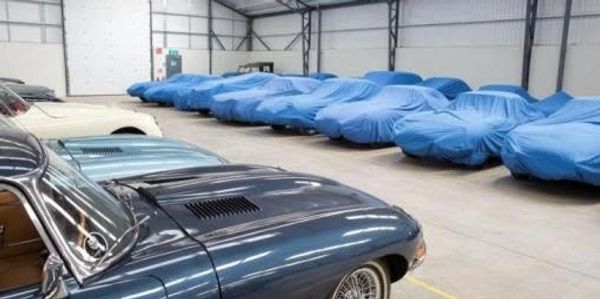
Use a car cover only for outdoor storage, or in very dusty locations. Leaving the car "open" indoors allows water vapor to leave the car after humid weather.
MAINTAIN THE BATTERY
If your garage isn’t heated, remove the car’s battery and keep it in a warm, dry place. Use a trickle charger to keep it topped off, as a discharged battery will be destroyed by exposure to freezing temperatures. One popular myth holds that a battery left on a concrete floor will discharge. It won’t.
If you have any questions about how to prep/store your car for the winter, would like to enquire about our storage availability or need to get your car in for service feel free to email us at TopGearMN@yahoo.com.